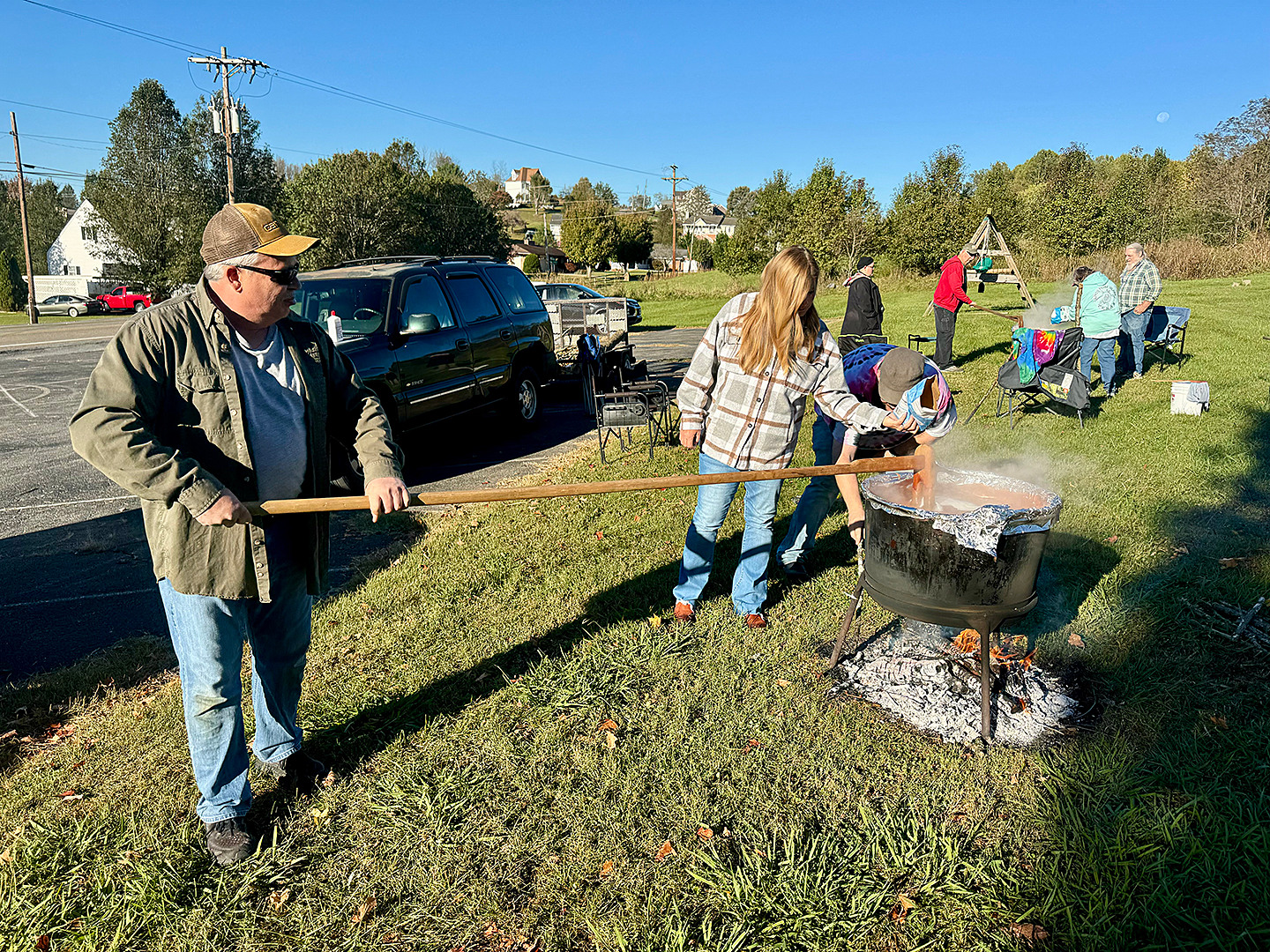
Plain, cinnamon, or extra-extra cinnamon. The choice is yours. The lesson is the same.
[Full Story Version — a condensed version appeared in the Kingsport Times News, November 7, 2026]
Allow me to tell you a story.
It’s fall, y’all. Up in the hills of East Tennessee, that means one thing: apple butter. Whether you like it plain, cinnamon, or extra-extra cinnamon, the choice is yours.
A couple of autumns ago, I came home from our family’s apple butter weekend and wrote a short post about it on Facebook. I didn’t expect much. It was a quick note about a pot, some apples, and the people who show up when it’s time to stir them. But that little post has stayed with me. Every fall since, I’ve found myself coming back to it.
I’ve come to believe that’s because the post was never really about apple butter. So I want to tell the longer version. This article (or essay; you decide) is based on that two-year-old Facebook post.
Roots in the Orchard
Long before my time, my family cultivated apple orchards in those East Tennessee hills. It started with my great-great-grandfather William Hickam and his brother Mel. It carried on through Ray Hickam, my great-grandfather; Lillian Katherine Hickam Gibson, my grandmother; Price Hickam; Mable Hickam Nottingham; and others whose names live on in family stories more than in any record book.
They pressed cider. They churned out applesauce. And they perfected apple butter. If you were lucky, you might even have snagged a slice of Mable’s legendary gooseberry pie (a recipe I finally finagled out of her son Richard—through my mom’s continued requests—a little over a year ago).
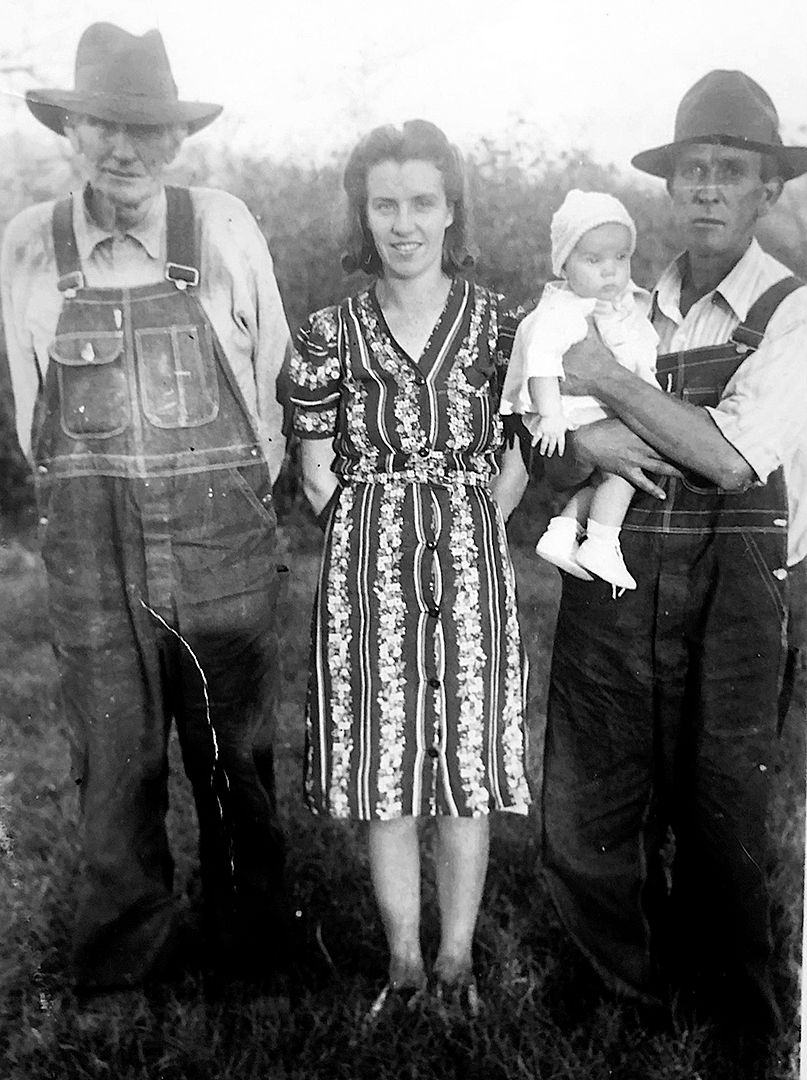
Great-great-grandfather William (Will) Hickam, Grandmother Lillian Katherine Hickam Gibson, Aunt Barbara Gibson Williams, and Great-grandfather Ray Hickam.
Great-grandfather Ray, like those before him, grew Stark Delicious, Winesap, and Stayman apples. I like to think about that. Those weren’t just varieties. They were decisions. Somebody chose what to plant, knowing they might not live to see the best of the harvest. That’s what stewardship looks like: planting for people you’ll never meet.
By the time I came along, the orchard had dwindled to just under an acre, a fraction of the sprawling hillsides of apple trees that came before. But for my cousins and me, those summers were paradise. We picked and snacked endlessly, whether the fruit was ripe, green, or somewhere in between.
The trees got fewer. The tradition did not. What remained, unshaken by time, was the making of apple butter. And, boy, do I appreciate that tradition more and more these days.
Arcadia, Tennessee
The place is Arcadia, Tennessee. My home; the dirt I was born from.
It’s a small, unincorporated community of less than 500 people, tucked in the upper corner of Tennessee, just a stone’s throw from Southwest Virginia. Kingsport, part of the Tri-Cities along with Johnson City and Bristol, was our closest city and the official address on our mail. But Arcadia was home.
Scotch-Irish and Melungeon culture shaped this corner of Appalachia, and the history there runs deep. In 1770, the Treaty of Lochaber redrew the boundary between Native American lands and colonial settlers. Families began moving into what is now Southwest Virginia and East Tennessee, following the Great Wagon Road down through the Great Appalachian Valley.
The stretch of that road through Arcadia became part of Daniel Boone’s Wilderness Trail in 1775. It carried settlers on through Moccasin Gap and over Cumberland Gap into Kentucky. Locals later called it Reedy Creek Road, then Old Kentucky Road. Today we know it as Bloomingdale Pike.
Revolutionary War veteran Robert Samuel Brashears received a 300-acre land grant along a branch of Reedy Creek. His tract and the surrounding land became known as the Reedy Creek Settlement, one of the earliest settlements in what is now Tennessee.
In 1836, Thomas Fain settled there and acquired the Brashears land. He named his plantation “Arcadia,” and the whole community took the name. Fain built a store along Reedy Creek Road that also served as the area’s post office starting in 1846, and he served as postmaster for fifty years. He also helped found Reedy Creek Academy, which became Arcadia School in 1919 and served the community until it closed in 1981. Most of my family attended that school growing up.
The store along Reedy Creek Road lived on for generations. The later version, Joe Fain’s Store, is the one I grew up hearing about. When the old-timers traded stories about Joe Fain’s Store, they were telling stories about family and community.
At the heart of it all sat Reedy Creek Campground and Cemetery. Around it lies land that has been in my family for generations: Gibson, Hickam, Hicks, Nottingham, and Williams. Those aren’t just surnames to me. They’re the people who taught me how to work, how to pray, how to laugh, and how to show up.
You can find Arcadia on a map, but you have to look really hard. Most folks find it by knowing someone who’s from there. That’s the kind of place it is.
What the Hills Remember
These hills held more than apple trees. If they could talk, they’d tell stories of moonshiners and bootleggers, the OGs of East Tennessee entrepreneurship. Long before anyone wrote a business plan, mountain families were turning corn into cash and grit into survival. Some of those stories get told with a wink. All of them deserve respect for people who did what they had to do to keep their families fed.
Just over the ridge behind the Hicks clan, before you hit the Virginia state line, Big Sandy sits. It’s a grassy field, strangely nestled smack-dab in the middle of a small valley in the woods, like a secret the hills decided to keep. Then there was the water tower, hidden by the trees, atop the ridge. My cousin Mike and I climbed it more times than I can count. Years later, it became our spot for rappelling.
Not every memory was mischief. My dad and I used to cut molasses cane (or “sugar cane,” as my family and our ancestors always called it) near the old Fain family plantation. That cane was made into molasses for the Ruritan Club fundraiser, donkey-driven mashing and all—fascinating to a young boy. It was hot, sticky work, and it wasn’t for us. It was for the community. Looking back, that was one of my first lessons in what it means to give your time to something bigger than yourself.
Hunting morel mushrooms with my dad remains one of my favorite memories. Spring in those woods meant walking slowly, eyes on the ground, and the quiet thrill of spotting one before he did. And my maternal grandmother, Georgianna, made the best fried morels I’ve ever eaten, a love I learned from my grandfather, John Tee Hicks, ketchup required. Years later, during my nearly ten years in Seattle, I walked past a market selling morels for more than $58 a pound. I just stood there and laughed. Back home, we used to hunt those suckers down for free.
Pappaw Hicks, by the way, played shortstop for Arcadia’s baseball team. So it shouldn’t surprise anyone that my first word wasn’t “momma” or “dadda.” It was ‘ball.” To my Grandfather’s great delight (which made it my mom’s too).
And the motorcycle trails. My cousin Chip (Hampton Loyd Williams III), the oldest son of my Uncle Hampton Loyd Williams Jr. (I called him Uncle H), and I, along with a few good friends, cut trail after trail through the hills and valleys that used to be home to more apple trees than you could count. The orchards gave way to dirt paths and engine noise. But the land kept doing what it had always done: giving the next generation room to roam, to take a few risks, and to grow up.
A Little Church with a Big Heart
What started as Reedy Creek Campground and Cemetery later became Arcadia Methodist Church, which in time became Arcadia United Methodist Church. It’s a little church with a big heart. It has outlasted many others for one simple reason: it has held tight to its commitment to neighbors and community. Like a death grip.
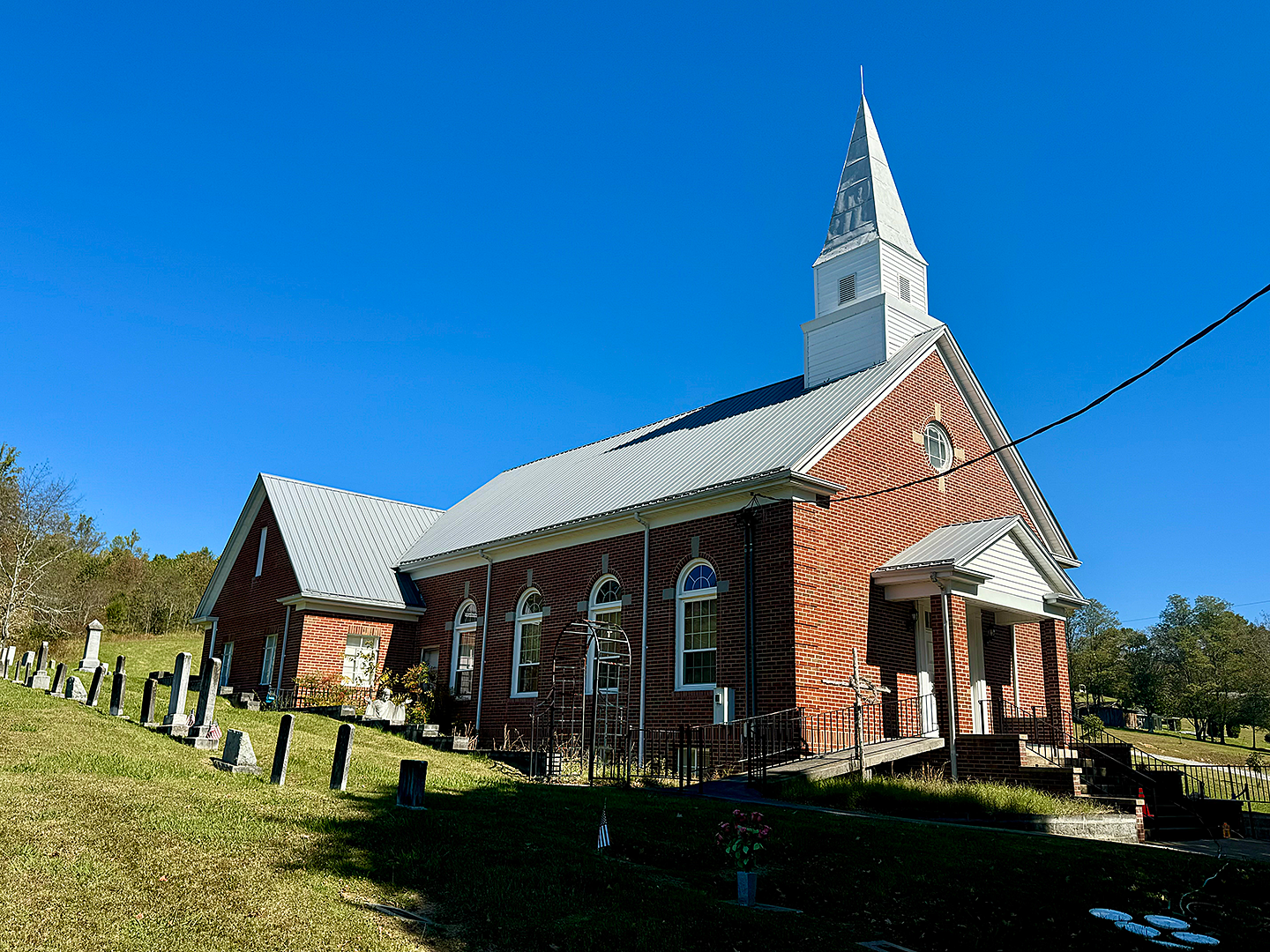
Arcadia United Methodist Church, present day.
My family’s fingerprints are all over it. My grandfather John Tee Hicks helped build the most recent brick version of the church. My other grandfather, William Clyde Gibson, led Sunday school and worship. My mom, Elizabeth Sue Hicks Gibson, played the piano there for more than 40 years. My dad, Gordon Wayne Gibson, led worship until he passed in 2012.
Both sides of my family lived within shouting distance of that church. My paternal grandparents, William Clyde Gibson and Lillian Katherine Hickam Gibson, lived directly across from it—where the apple orchard sat. My maternal grandparents, John Tee Hicks and Georgianna Dixon Hicks, lived right beside it, with the rest of the Hicks clan sprawled up the hill (we called it Hicks Hill). These families were about 100 yards apart, as the crow flies. The church sat in the middle, and so did I. As did the tradition of apple butter making. It literally united the Gibsons and the Hicks families—that and love.
That church still serves. Today it runs a food pantry in partnership with Second Harvest Food Bank, supporting families in need. No press release. No ribbon cutting. Just neighbors feeding neighbors, week after week. Nottinghams, Gibsons, Hicks, Hickams, Williams, and many new families have made it their home.
That church is also where my faith took shape, and with it, my compassion for community and serving.
My Sunday school teacher, Sharon Livesey, taught me more wisdom than I can count. She was Uncle H’s sister, and she simply graduated with our Sunday school class each year, all the way into adulthood. A schoolteacher and later a principal, she had a mesmerizing way of teaching and encouraging. In youth group, no one brought out my creativity like Linda Stratton. She was magical at turning thoughts and dreams into reality. She’s also where I got my deep love for Halloween. A genuine artist in every way imaginable. Both Sharon and Linda influenced me deeply during important years. That’s the gift of a good church and a good community: it multiplies the number of grown-ups who believe in a kid.
It was in Arcadia that I first learned about compassion, the power of community, and the importance of giving. Separate from my business/marketing journey, I’ve spent more than 26 years in faith-based and nonprofit work since then. I’ve studied theories of change, built strategic plans, and measured impact. But I learned much of what I believe about community in that sanctuary and in the fellowship hall, and from family, including blood relatives.
The Work Behind the Jar
One of my dad’s closest friends and cousin, Richard Nottingham, works tirelessly with his cousin Mary Emma Hickam Brackett, and now with my sister Jody, to keep the apple butter tradition alive. Regretfully, I’ve missed more than a few gatherings over the years. Life, work, and miles have a way of pulling you off the hill. But thanks to Richard, I’ve picked up just enough to know how much I still have to learn.
Making apple butter is not a quick job. There’s the hard work behind the scenes: peeling, cooking, and saucing the apples. There’s the long stretch at the pot, where patience matters more than skill. And there is, of course, the great sugar debate. Mable swore by 30 four-pound bags per pot. Richard, her son, has his own take, closer to 24. I won’t settle that argument here. I value my family relationships too much, and my love for Aunt Mable, who is no longer with us.
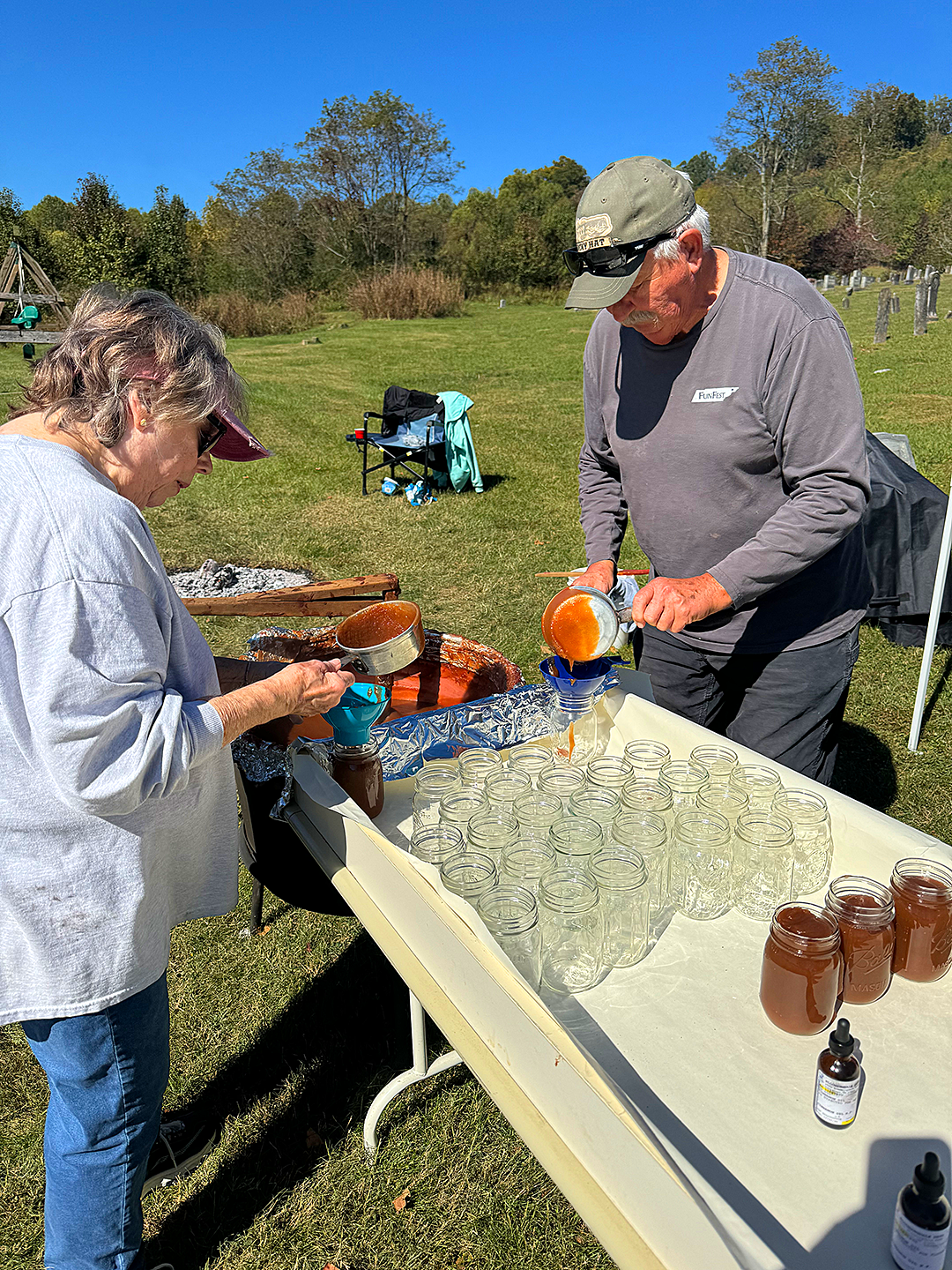
Mary Emma Hickam Brackett and Richard Nottingham.
But I’ll say this. Every tradition worth keeping has a Richard and a Mary Emma. Someone who remembers how it’s done, makes the calls, and shows up early so everyone else can show up. Traditions don’t survive on nostalgia. They survive on people willing to do the work. I so wish I had been available this year to help drive this important work.
What Rises from the Pot
The real heart of it isn’t the apple butter. It’s the stories that surface while it cooks.
Every year, they come back around. Tales of Joe Fain’s Store. Family hijinks. Sledding mishaps. Hunting morel mushrooms. Baling hay and riding on hay wagons. Antique tractors and hay rides. Long nights of Pedro, the Southern Appalachian card game that has settled more family scores than any courtroom. Anything that gets people laughing.
Somebody starts a story. Somebody else corrects it. A third person swears they were there and it happened completely differently. And just like that, the history of a place gets passed down, one turn of stirring at a time.
I’ve noticed something as I’ve gotten older. The tradition never gets old, but I do. And the older I get, the more these gatherings mean. You start to understand that the people telling the stories won’t always be there to tell them. So you listen a little closer. I have always listened closest to my Uncle H’s stories. They are the best.
Christmas in Arcadia
If fall belonged to apple butter, December belonged to family.
Christmas Eve was always on my mom’s side, with the Hicks family. We gathered at Mammaw Hicks’ home, and later at Uncle Lloyd and Aunt Doris’ home. So much fun and laughter. It was also where Johnny and I usually got ourselves into trouble at the Pedro table. More on that in a minute.
Christmas Day belonged to the Gibsons. Everyone packed into Pappaw Gibson (Clyde) and Mammaw Gibson’s (Lillian) home: all my aunts and uncles and so many cousins. Those Christmases were the best. And many of them were white, something that has rarely happened in the decades that have passed.
The afternoon always included an impromptu down-home guitar pickin’ jam session. Pappaw Gibson taught me how to play the guitar. He and his brother GL played together long before Chip and I joined in the shenanigans whenever GL came for Christmas. GL could play like Chet Atkins. Rumor has it that those two Gibson brothers played on the radio decades ago.
We also spent those afternoons looking at slides; photo projections of all of us cousins growing up. My grandfather took real pride in his annual birthday pictures of every one of us. We dreaded them then. We cherish them now.
Music runs deep in this family. You might say we have an arm and a leg in country music. My distant cousin, country music legend Don Gibson, was my grandfather’s cousin. Their families slipped apart when Pappaw’s father moved the family from Western North Carolina to East Tennessee for work, when Pappaw was only 10 years old. Don’s family and Pappaw’s sisters stayed in North Carolina.
Don was born in Shelby, North Carolina, in 1928. In 1957, Chet Atkins signed him to RCA Victor. He wrote country standards like “I Can’t Stop Loving You,” “Oh, Lonesome Me,” and “Sweet Dreams.” Ray Charles took “I Can’t Stop Loving You” to No. 1 on the Billboard Hot 100 in 1962, and Don was inducted into the Country Music Hall of Fame in 2001. Crazy, when I think about it.
So when GL picked like Chet Atkins in my grandparents’ living room, I don’t think it was a coincidence. Some things just run in the blood.
Uncles, Aunts, Cousins, and a Game of Pedro
Now, about that Pedro. Every holiday season meant Pedro tournaments. My cousin Johnny and I were eventually banned from partnering. We’d won too many times. My sister Angela, convinced we were cheating, passionately enforced the ban. For the record, we won on pure skill and strategy. At least, that’s the story we are sticking to.
I can still hear Uncle H come in on a winning hand, throw down face cards, and holler, “Let the timber fall!” Partnering with my Uncle Lloyd Hicks was a different kind of adventure. The minute the bidding round opened, he’d bid sky-high, and I’d about have a heart attack. Somehow, he always won the hand, even when he gambled on a ridiculous bid.
My Uncle Don Fulkerson was one of the most influential men in my life besides my dad. He taught me all things outdoors and helped perfect my golf swing. To this day, the smell of cedar and a hint of bourbon takes me right back to so many memories with him.
My uncles and aunts shaped me as much as anyone. Uncle H taught me patience and compassion, just as my dad did. Dad also taught me hustle and discipline. Uncle Don taught me courage and to believe in myself. Uncle Lloyd taught me to embrace risk and make bold moves. Uncle George taught me to laugh until my stomach hurt. Aunt Jean and Aunt Barb were like second moms, and Aunts Doris, Ilene, Carolyn, and Shirley showered me with love and encouragement. I was blessed to be a part of a big family, on both sides, with so many cousins. That’s the real inheritance.
It’s amazing what you remember. Over time, you come to understand that these people are still a part of you, and they always will be. So many touch points. So many influences, from uncles and aunts alike.
It Was Never About the Apple Butter
That fall of the Facebook post, October 2024, Uncle H, then at age 89, said something I haven’t been able to shake:
“You know, it’s really not about making apple butter at all. It’s about bringing people together. It’s about community.”
He’s right. And I think he named something much bigger than one weekend in Arcadia.
We live in a time when division, misinformation, and selfishness seem to dominate the world around us. It’s easy to believe that real community is a thing of the past. But a large kettle of apple butter on an open flame tells a different story. It takes many hands. It takes hours. It can’t be rushed, and it can’t be done alone. Somebody peels. Somebody stirs. Somebody brings the jars. Somebody tells the story that makes everyone laugh. Every role matters, and nobody gets to be a spectator for long.
That’s not just a recipe. That’s a model for how communities work.
I think about this a lot in my work with young people. The research on what helps kids thrive keeps pointing back to the same thing: belonging. A place where someone knows your name. Adults who show up, again and again. A role to play. Stories that tell you where you come from. I didn’t have that language as a boy on a hill in Arcadia. But I had the experience. Long before I ever said the words Rise. Belong. Become., I was living them around a large copper kettle of apple butter.
Community isn’t a feeling. It’s a practice. You build it the same way you make apple butter: slowly, together, and on purpose.
A Little More Apple Butter
So here’s my invitation. Find your pot.
Maybe it’s a church supper, a Little League concession stand, a neighborhood cleanup, or a Club full of kids who need one more adult to show up. Maybe it’s a family tradition that’s hanging on by a thread and needs someone to learn how it’s done before the people who know are gone.
We don’t make apple butter every year anymore. There are fewer hands now, and the hills are a little quieter. I wish I could be more involved these days. But this fall, on October 17, family and friends at Arcadia fired up the copper kettles once again. And where was I? On vacation, writing this very article. Irony has a sense of humor. Thankfully, Richard and the crew stirred anyway.
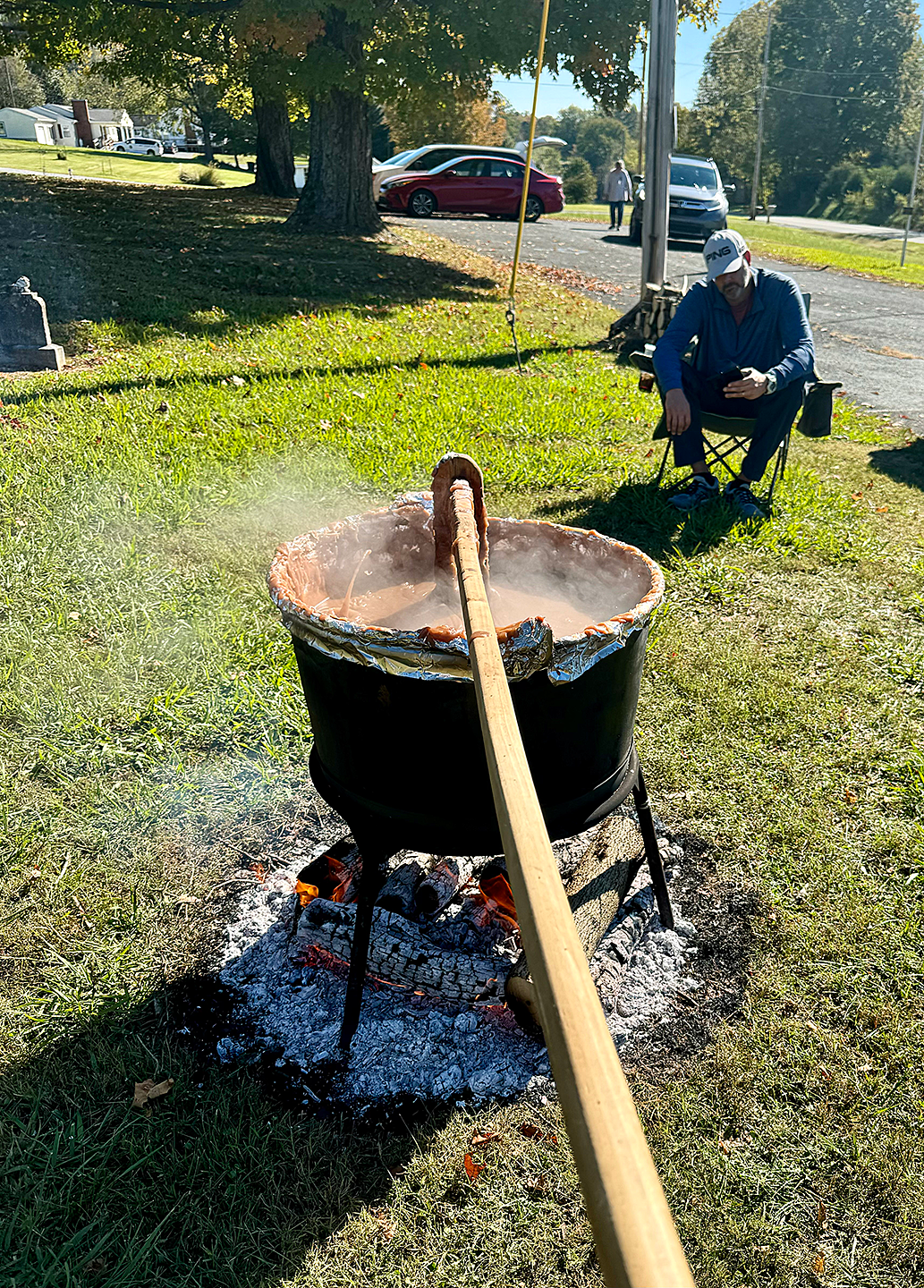
So find your pot, grab a long-handled wooden stirrer, and start stirring. And if you’re out Bloomingdale Pike, stop by Arcadia United Methodist Church at the heart of historic Arcadia. The apple butter is made with love, and it won’t last long. While you’re there, know the little church is still feeding neighbors, and they’d welcome you to join in.
Maybe we all need a little more apple butter in our lives. From my family to yours.
• • •
This article is adapted and expanded from a Facebook post I shared on October 25, 2024. A condensed 900-word version was published on November 7, 2026, in the Kingsport Times News, my hometown paper (see below).
Historical background on Arcadia and the Reedy Creek Settlement: Arcadia, Tennessee (Wikipedia).
Background on Don Gibson: Country Music Hall of Fame and North Carolina Music Hall of Fame.
William D. Gibson is President & CEO of Boys & Girls Clubs of the Greater Triad (BGCTriad), serving youth across High Point, Greensboro, Winston-Salem, and the surrounding Core Region. He writes on leadership, community, and positive social change.
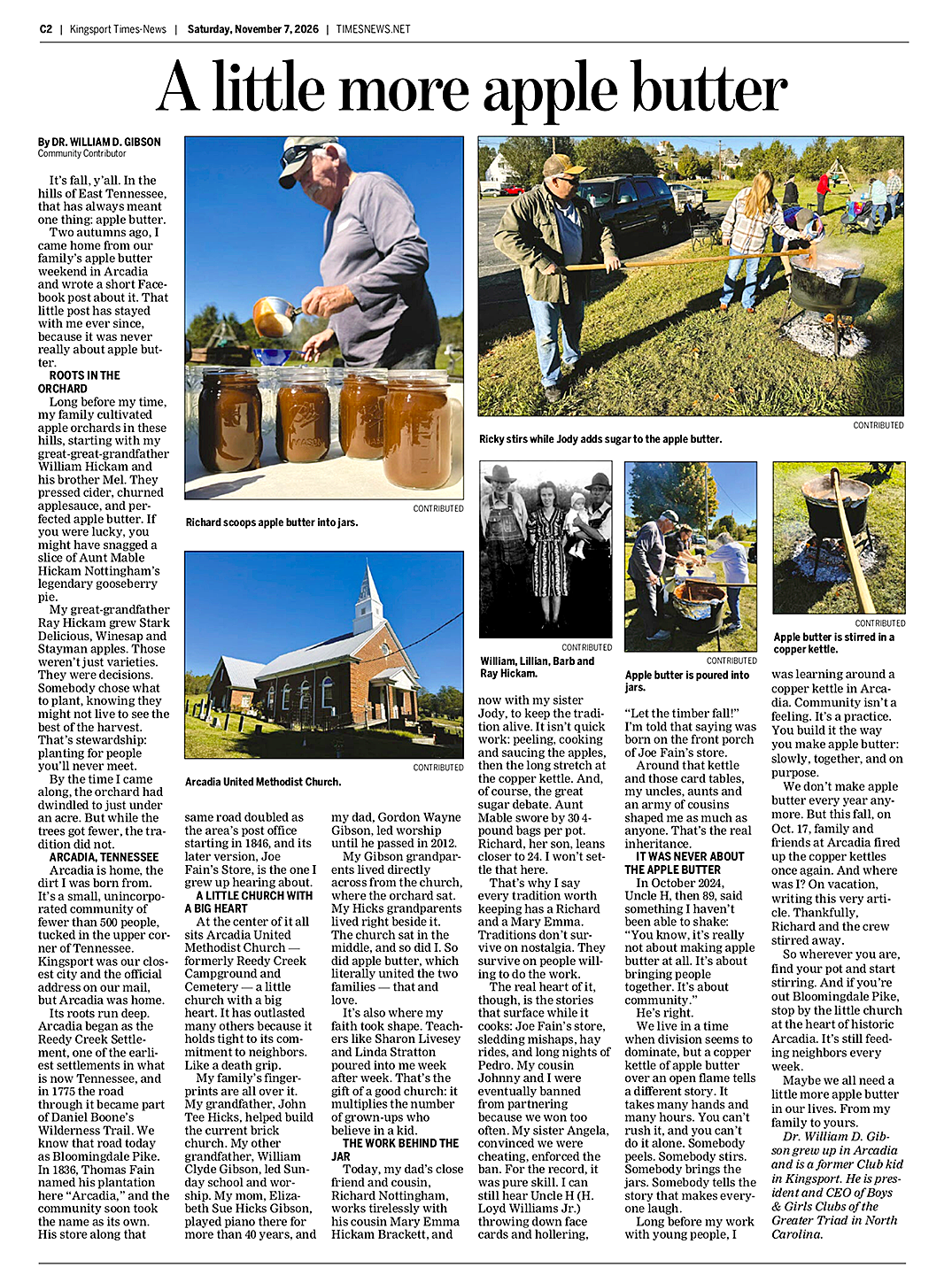
A 900-word condensed version, published in the Kingsport Times News on November 7, 2026.