Flying High
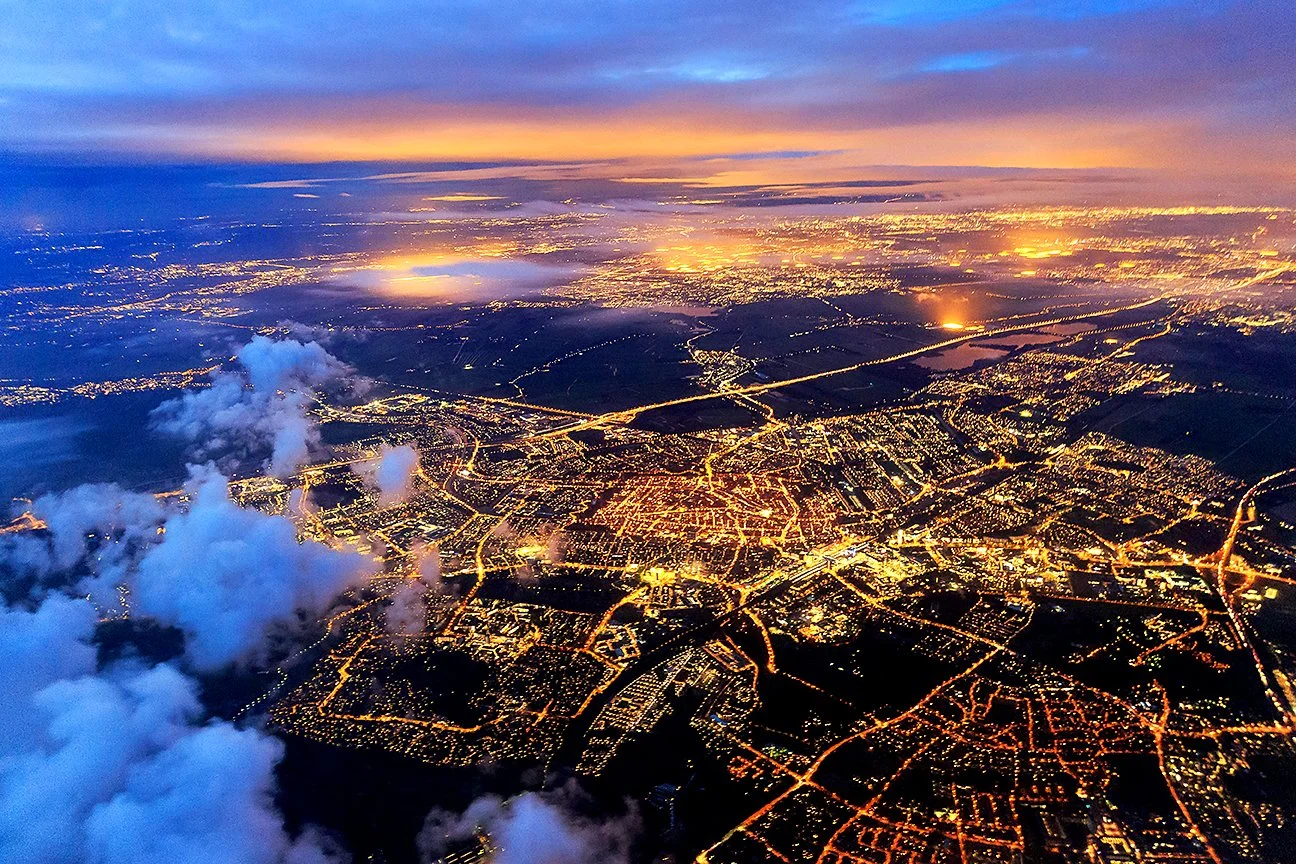
There was a season of my life when I spent a lot of time on airplanes.
Flying across Oregon, Washington, Idaho, Alaska, and parts of Canada, you cover vast stretches of land. The Greater Northwest reveals mountains, rivers, forests, wilderness, and long expanses where towns appear only as small clusters of light. If you’re paying attention, something happens up there at 30,000 feet. The world you left behind—meetings, deadlines, titles, expectations—shrinks. What felt heavy begins to loosen its grip.
From that height, you can’t see who’s in charge. You can’t tell who has influence, money, or status. You can’t distinguish the powerful from the ordinary. You see only land, water, weather, and the quiet geometry of human presence trying its best to belong.
It’s a humbling view. Truly.
We spend a lot of our lives trying to be seen as important. To be heard. To be recognized. Leadership culture often reinforces that impulse—bigger platforms, louder voices, sharper edges, heavy responsibilities. Somewhere along the way, it becomes easy to confuse visibility with value, or authority with wisdom.
But the view from above doesn’t support that story.
What it reminds you of—what it reminded me of—is how small we are as individuals, and how dependent we are on one another. Every community below depends on systems we didn’t create alone. Roads built by many hands. Schools shaped by generations. Families, neighborhoods, and institutions layered over time, held together not by singular leaders but by shared responsibility.
That realization doesn’t diminish leadership. It reframes it.
Authentic leadership, I’ve come to believe, isn’t about standing out. It’s about standing with. It’s not about demanding attention, but about paying attention—especially to the people and places that are easy to overlook when we’re moving too fast or chasing the next measure of success.
The longer I’ve worked in communities—particularly those under-resourced, navigating scarcity, inequity, or transition—the more I’ve learned that progress is rarely dramatic. It’s incremental. Relational. Often invisible until years later. The work that lasts tends to be quiet: building trust, creating space, staying present, and elevating others when it would be easier to move on.
From the air, you see how fragile our sense of control really is. Weather shifts. Turbulence arrives without warning. Plans change. And yet, somehow, we keep moving. We’re held by systems larger than ourselves, guided by people we’ll never meet, sustained by collective or collaborative effort.
There’s a lesson in that.
If we lead as though we are the center of the story, we will eventually disappoint ourselves and others. But if we lead with the awareness that we are part of something larger—something shared, unfinished, fragile, and deeply human—we tend to make better decisions. Kinder ones. More durable ones.
In 2026, I will turn 60 years old. And as I move into this next chapter of my life and work, I find myself less and less interested in being right and more interested in being useful. Less focused on legacy and more focused on stewardship. The question that stays with me isn’t How big can this become? but How grounded can we remain as we grow and sustain?
The view from 30,000 feet doesn’t tell you what to do next. It doesn’t offer strategy or certainty. What it offers is perspective—a reminder that none of us carries the work alone, and that the most meaningful change almost always happens when we stop trying to be the tallest or loudest in the room.
We are small. That’s the truth.
And together, that’s precisely what makes us strong.